Nevada Newsmakers

In future, small nuclear reactors could power TRI, other major data centers, U.S. nuclear commissioner says

News - May 11, 2026

Data centers have become essential in our modern, digitized world. They provide computing power for Artificial Intelligence, cloud computing and other digital services.

Their opponents, however, don't want them in Northern Nevada because of their dependence on large amounts of water and power to operate. Some fear the industry will overwhelm the power grid, cause rolling blackouts for the citizenry and increase energy bills. Water in the driest state in the union, they argue, should not be siphoned off to cool down rows and rows of humming computers.

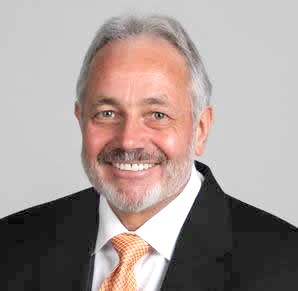
One proposed solution would have data-storage facilities build their own power plants -- using nuclear energy -- and not burden a community's power grid, Brad Crowell, commissioner of the U.S. Nuclear Regulatory Commission, said recently on Nevada Newsmakers.

Some of the corporations that have data centers and similar businesses at the Tahoe-Reno Industrial Center may already be quietly considering nuclear power, Crowell told host Sam Shad.

"Theoretically, you should be able to have a behind-the-meter application of nuclear power that is dedicated to a specific data center or an industrial park," said Crowell, son of former Carson City mayor and Carson school-board president Bob Crowell.

"You know, certainly some of the big hyperscalers are looking at doing that. The Googles and the Metas and the Amazons are already looking at co-locating new, nuclear power near their data centers," Crowell said.

Small modular nuclear reactors and micro-reactors are currently under development in the United States, according to the U.S, Energy Information Administration. A commercially viable nuclear micro-reactor could be ready to go online by 2030 or 2031, said Mike Luther, Chairman at Elemental Nuclear, a company that is developing nuclear micro-reactors for industry.

"That's certainly the aggressive end of the timeline," Crowell said of Luther's prediction.

Currently, however, the Nuclear Regulatory Commission is receiving many applications to develop the smaller, high-tech reactors, Crowell said.

"The power demands of data centers and AI have exceeded expectations," he said. "The near-term need for more stable, baseload power is evident. That that being said, you know, the role that the NRC plays is as a safety regulator. So our goal, our our mission is not necessarily to put more power on the grid but to make sure that any power that's put on the grid, using nuclear energy, is done so safely and securely."

"And that's what we're working on right now," Crowell continued. "And we're on the precipice of a of a deluge of applications from reactor developers looking to develop advanced reactor technologies to meet those energy demands."

Micro-reactors could also conceivably be used in Nevada's mining industry, Crowell said.

"I've heard it, you know, bantered about and theorized in various circles," Crowell said about mining's use of micro-reactors. "But, the mining industry has not necessarily come to the NRC with a serious proposal yet that they're looking at. That could change in the future, though."

Water, safety issues

Much of the home-grown opposition to data centers in Northern Nevada centers on the copious amounts of water needed for cooling in current, non-nuclear technologies. A medium-sized data center can consume up to roughly 110 million gallons of water per year for cooling purposes, according to the Environmental and Energy Study Institute, an environmental non-profit based in Washington, D.C.

Current "light water" nuclear reactors also use up water for cooling. Nevada is the driest state in the union, with annual average rainfall at about 10 inches, according to the Nevada State Climate Office.

Yet new technologies for smaller nuclear reactors could, instead, use elements as helium gas, molten salt or liquid metal as coolant, drastically decreasing the amount of necessary water.

"Some of these new, nuclear technologies that use molten salt both for fuel and cooling don't have the water needs that the traditional nuclear fleet has," Crowell said. "But in places like the West, nuclear light-water plants use enough water where it does need to be considered. I like to point to the Palo Verde Station in Arizona, which uses reclaimed water for their cooling needs, which in my view, would be a prerequisite for any light-water, large reactor in the West."

TRI's reclaimed-water solution

The Tahoe-Reno Industrial Center, however, could be a model for using non-potable, reclaimed (gray) water for its data-center cooling needs. Currently, the industrial park's many data centers and other manufacturing companies use reclaimed water supplied by a massive 16-mile, $100 million pipeline. It brings millions of gallons of treated effluent daily from the Truckee Meadows Water Reclamation Facility in Sparks to the industrial park in Storey County. The reclaimed water is predominantly for used for cooling needs of data centers like Switch but is also used for manufacturing.

"This (pipeline) was built in a consortium with the master developer and big data centers plus Tesla and Panasonic," said Kris Thompson, a spokesman for TRI. "It takes 4,000 acre feet of water from the TMWA sewer treatment plant in a 36-inch reinforced steel underground pipeline that is operating and it puts it in a reservoir at TRI and it is distributed out to data centers and in the park.
"So there is no danger to a aquifer, at least at TRI, which has most of the data centers here," Thompson said.

TRI's extensive use of reclaimed water could also fill cooling needs if the industrial park, in the future, had its own small modular reactor, Thompson said.

"For the SMRs, if they need water, they would be using that reclaimed water from the reclaimed water system," he said.

Companies and corporations at TRI had to agree with the reclaimed-water-for-cooling solution before purchasing their parcels, Thompson said.

  "When TRI sold the property out there, there was a contractual provision where they (incoming companies) agreed that in the future, they could be converted to reclaimed water at the option of the TRI GID (general improvement district)," Thompson said. "And so, 4,000 acre feet is a lot of water in that pipeline. In the future, it could actually put out 8,000 acres feet and with the growth of the area, that will probably come to pass. So the cooling at TRI, going into the future will be almost all gray water."

Clean energy, fearful past

Some people automatically fear the notion of nuclear power because of past nuclear accidents such as at the Chernobyl disaster (1986) in Ukraine and the Fukushima Daiichi accident (2011) in Japan.

Yet with improved technologies and strict adherence to safety regulations, Crowell said nuclear has proven to be the cleanest form of energy.

"It's true, statistically in terms of carbon or other kind of pollutant emissions and in terms of public health outcomes and mortality rates, there's no comparison to the safety record of nuclear in that regard," Crowell said.

Crowell can point to the U.S. Navy when making a strong argument about the safety of nuclear energy.

The U.S. Navy first put nuclear power to use in 1954 when it launched the nation's first nuclear submarine, the USS Nautilus. Currently the Navy has more than 80 nuclear-powered vessels, including 11 aircraft carriers and more than 70 submarines, according the World Nuclear Association.

The nuclear power on the ships at sea ends the need for refueling and turns the carriers and subs into fully functional, long-endurance war platforms.

The U.S. Navy had two nuclear-powered submarines sink at sea in the 1960s. Both were not caused by a reactor accident. There was no release of radiation, according to reports. The U.S. Navy has not had a single radialogical accident within its 526 nuclear-reactor cores in more than 50 years of service, according to the World Nuclear Association.

"The nuclear Navy has been successful because they adhere to the highest safety guidelines," Crowell said. "They have very well-trained people operating the propulsion systems on those vessels. So as we look at expanding commercial nuclear power, we need to continue to take lessons from the nuclear Navy about how we safely operate nuclear power. And I think the Navy's has a great track record."

Strict safety precautions are some of the most important factors in harnessing nuclear energy, Crowell said.

"There's lots of things within nuclear that need to be handled very carefully and delicately," he stressed. "And that's from the front end, the fuel cycle in terms of fuel security to operating plants, to make sure that nothing goes sideways from a safety perspective.

"So if all of those things are addressed and managed, commensurately, nuclear's a very good option for clean base-load power," Crowell said. "But you do have to acknowledge all of those tenets of nuclear that come with creating carbon-free nuclear power. "

Crowell saw the results of the Fukushima Daiichi nuclear accident first-hand when he was part of a U.S. aid team sent to Japan after the accident.

"The U.S. was the main partner helping them control the situation," Crowell said. "And then the NRC helped Japan rebuild its nuclear regulatory system. And they adopted many of the things that the NRC has done for a long time."

Crowell returned to the U.S. after learning some sobering lessons.

"We need to now look domestically at not repeating the mistakes that we've helped others avoid," Crowell said. "We're doing a wholesale overhaul of our nuclear safety and security regulations, and we're being pushed to move very fast in doing that by the current (Trump) administration. And, I worry sometimes that speed will undermine the quality and integrity of these regulations and lead to something bad down the line, in terms of deployment."

NRC regulations are stringent and precise. But with the potential commercial applications, some want the NRC rule book to lose some pages, Crowell said.

"There is a push right now to really skinny down the safety review that the NRC does," he said. "And there is room for improvement and efficiency, for sure. But we don't want to start cutting corners because when you cut corners, something eventually will go wrong.

"And then, there's no such thing as a one-off nuclear incident," he said.
Any nuclear accident has world-wide impacts, Crowell said.

"A nuclear incident anywhere qualifies as a nuclear incident everywhere because everyone's got to take advisement about any changes that need to happen," he said.

"So I worry about those things," he said. "I really worry about them, not just domestically, but internationally as well, with geopolitics being what they are. And you see commercial nuclear power plants like .. in Ukraine that are being weaponized on the battlefield. These are troubling developments that need to be thought about as we expand the base of nuclear power around the world."

Toxic waste component

Another issue with the possible micro-reactor nuclear power is the toxic waste it will produce.

"This is partly in the NRC's jurisdiction as well as in DOE's (Department of Energy) jurisdiction," Crowell said about nuclear waste management. "With these new advanced reactors, in terms of the smaller ones or the micro-reactors, we're still doing some of the spadework to determine exactly the volume of waste and the radioactivity of the waste associated with those reactors.

"But, in all likelihood, it will be handled in a traditional way of needing some cooling off time at the reactor site and then put in dry cask storage until there's an alternative -- either an intermediate geological repository or a permanent geological repository," Crowell said. "But for the foreseeable future, you know, dry-cask storage is has proven to be safe and is suitable."

Research is also being done about the reprocessing of nuclear waste. France and other nations already have reprocessing programs. The U.S. is shifting from the concept of long-term storage to also developing commercial recycling technologies, according to a study published by the Yale School of the Environment.

"There's a few developers, right now in the U.S. that are looking at recycling or reprocessing technologies," Crowell said. "And, there's proliferation concerns that come along with that, but those proliferation concerns can be managed. And if we can achieve some level of success in recycling, it's not going to solve our waste problem. But will minimize how quickly we're adding to the waste problem. Overall, as you know, there's already enough waste out there in dry-cast storage to fill up a Yucca-Mountain-style repository and then some."

The Yucca Mountain factor

Nevada's congressional delegation has not contacted the NRC about possible micro-reactors in Nevada to power the data center/AI sector. That does not mean the issue is not on their radar, Crowell said.

"The Nevada delegation hasn't engaged the NRC, that I'm aware of, or have not met directly on this point," Crowell said. "But I do know that there's some thinking about it behind the scenes. The quandary is, there are things in Nevada that are very applicable for base-load nuclear power, and that could be data centers, other heavy energy, industrial processes or mining."

Yet the federal Yucca Mountain nuclear-waste repository -- or Nevada's longstanding political battle against it -- could be a sticking point when it comes to delivering any nuclear power to Nevada's burgeoning data center/AI sector, Crowell said.

"If Nevada is going to go down that direction (officially opposing the Yucca repository), there's got to be a a decision made  -- at a higher level than me and beyond my scope --  about whether opposition to hosting a nuclear waste dump is undermined by willingness to house nuclear energy for the first time in Nevada," Crowell said. "Like I said, it's above my pay grade. But that's what the politicos have got to figure out first, before we move forward with nuclear Nevada -- if we move forward."


Read full article


Recent Articles:

Democratic candidates for U.S. House cautious of rapid growth of data centers in Northern Nevada
News - April 29, 2026

"We have a saying here in Nevada, you fight for gold, but you kill for water. That's how important of a resource it (water) is to us." Teresa Benitez-Thompson.         "So right now, data centers don't make a strategic fit from the way I see Nevada's position. Even though I'm a tech guy, it doesn't seem like a fit for our state." Greg Kidd. "Data centers drive up our energy cost. Data centers drink up our precious water." Kathy Durham

Sparks fly, accusations levied in Washoe DA debate between Hicks, Duncan
News - April 23, 2026

"He is a career politician who will say anything and do anything to get to the next rung of the political ladder, without ever gaining any meaningful experience," Chris Hicks on Wes Duncan.               "He (Hicks) can call me a liar as much as he wants. Facts are the facts, and they're stubborn things. This is quite simply incumbents supporting incumbents. Chris Hicks is in the pocket of every single special interest who've tried to run this town for the last 50 years." Wes Duncan on Chris Hicks

State of nation, world raise stakes in 2026 election, Democratic congressional candidate Kidd says
News - April 13, 2026

"So there's a sense of real fear out there that the country is on a terrible course. And this fear is not just in one party, it's across parties, it's the non-partisans. Things are way off course." Greg Kidd, Democratic candidate for Nevada's 2nd U.S. House District seat

Democrat Benitez-Thompson sees her shot in Nevada's 2nd U.S. House District race -- and takes it
News - April 8, 2026

"We're going to see some real challenges on the Republican side and perhaps an uninspired electorate that's really frustrated with this President and frustrated with this administration and that they're going to under-perform." Democratic CD-2 candidate Teresa Benitez-Thompson

Not expecting Trump's endorsement, Settelmeyer runs for Congress on his extensive political record
News - April 5, 2026

"I've been very fortunate. You know, I grew up in agriculture my whole life -- fourth generation Nevadan." James Settelmeyer of Douglas County, who resigned as director of the Nevada Department of Conservation and Natural Resources last month to run for Congress.

Sparks Mayor Lawson, honest while seeking re-election, says property taxes need to increase
News - April 1, 2026

"Our expenses over the last five years have gone up 55 percent. Revenues have gone up 35 percent. We have a broken system." Sparks Mayor Ed Lawson


Bybee cites two major disagreements with Sparks mayor in campaign to replace him
News - March 30, 2026

"I'm not saying he (Mayor Lawson) doesn't (communicate well), but I think, his communication skills ... his communication skills are not as strong as mine are. And I hear that from voters at the door, other people who are frustrated, frustrated with a lot of things, a lot of challenges that we're facing right now." Sparks mayoral candidate Charlene Bybee, current city council member

Family legacy leaves indelible mark on Clark Commission candidate Mack
News - February 25, 2026

"My grandfather was really my North Star in everything," Albert Mack, speaking of grandfather Jerry Mack, a banking and real estate pioneer of Las Vegas

Amodei's retirement was well-kept secret; his Capitol Hill staff 'didn't even know,' Rep. Titus says
News - February 22, 2026

"I'm never comfortable. I follow the ol' Richard Bryan theory, where he says, 'You either run scared or you run unopposed.'" U.S. Rep. Dina Titus, talking about the upcoming 2026 election and referring to former Nevada Gov. & U.S. Sen. Richard Bryan

AG candidate Conine says protecting citizenry against violent crime should come before lowering retail-theft felony thresholds
News - February 12, 2026

"Whether or not the (retail theft felony) threshold goes up or down, people could argue it either way. But they (law enforcement) want to make sure they've got the resources to take care of violent criminals and make sure we keep violent criminals off the street." Nevada Treasurer Zach Conine, running for attorney general

'Prediction markets' pose threat to Nevada's legal sportsbooks, says Joe Asher, CEO of Boomer's Sportsbook
News - February 10, 2026

"These betting exchanges are directly competing with regulated and tax-paying sports books." Joe Asher

Longtime sports-betting expert Asher expands his Boomer's Sportsbook into Reno market
News - February 9, 2026

"We're expecting to open there (Bonanza) the middle of the month. I think we're going to have a soft opening around February 13th or so, and then a grand opening event February 17." Joe Asher, talking about expanding Boomer's Sportsbook into the Reno area, at the Bonanza Casino    


ICE needs overhaul of culture, Rep. Amodei says: 'What you're doing now isn't working'
News - January 29, 2026

"What you're doing now isn't working. There needs to be a pivot, not a go-away." U.S. Rep. Mark Amodei, R-Carson City, on the ICE strategy in Minneapolis

U.S. House will have floor vote on new healthcare bill before Christmas, Rep. Amodei says
News - December 16, 2025

"Like, hey, this dog ain't hunting. We got to get a new dog. I mean, nobody wants expensive health care." Rep. Mark Amodei, talking about a need to overhaul the heathcare-insurance system

Embattled Speaker Johnson has a friend in Northern Nevada's Rep. Amodei
News - December 14, 2025

"I don't think he's in any trouble. I don't think he's in any trouble at all." Rep. Mark Amodei, on House Speaker Mike Johnson

LVCVA battles 'headwinds' it can't completely control in marketing Las Vegas, CEO Hill says
News - December 11, 2025

"I say this at the LVCVA all the time: You're almost never completely in control of what you want to achieve. You know, you don't control all the variables out there in any aspect of what your goals are. Steve Hill, CEO, president of LVCVA

Las Vegas' Formula One race of 2025 should exceed economic impact of 2024 race, LVCVA's leader says
News - December 10, 2025

"They sold more tickets. The attendance was somewhat higher this year than it was last year. Room rates were stable and moving up as we got closer to the race, which was different than what we saw in Year Two." Steve Hill, LVCVA president and CEO

Gov. Lombardo should not include movie-studio bill in anticipated special session, Rogich says
News - November 9, 2025

"I think it's a mess.I don't think it's good for our state. I call it a big boondoggle." Sig Rogich, president, Rogich Communications, on Summerlin Studios project


Next Page Last Page