
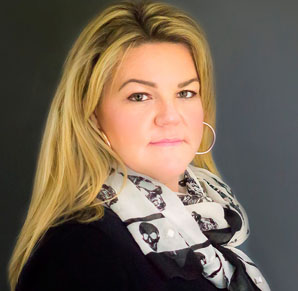
Rachel Dahl, strengthening communities and building civic infrastructure through local journalism across Nevada.
RSS FeedCommentary - October 7, 2026
We can build a truck factory where robots and people work together, turn loose computers that might change the way we think, and dream up entirely new industries out in the Nevada desert.
But we can’t figure out the traffic.
That was the thought that kept coming back as I listened to Sam Shad’s conversation with Storey County Commissioner Clay Mitchell on Nevada Newsmakers. They covered Tesla’s semi-truck factory, transportation, artificial intelligence, data centers, and the possibility of opening more land for development near Fernley.
And through it all ran a question that ought to be posted above the door of every economic development office in Nevada: How is this going to work for the people who live here?
Mitchell described touring Tesla’s new semi factory, where, he said, the company had thought carefully about which jobs belonged to robots and which belonged to human beings. Different sections of the cab travel along parallel assembly lines before coming together. The trucks get powder coating rather than conventional paint.
There is something satisfying about people figuring out how to do a thing better. Less wasted motion. A process that makes sense. Each factory teaching the company something it can use in their next expansion.
According to Mitchell, Tesla’s annual production target is 50,000 semis. The project was originally announced with an estimate of 3,000 permanent workers, and he said roughly 600 to 700 were already on the semi team when he toured.
“We’re totally fine if that ramp takes some time,” Mitchell said, referencing the build up to full production.
And that’s a sentence you don’t hear every day in a conversation about economic development. Usually everybody wants more, faster, preferably announced at a podium with an oversized check.
Mitchell’s reason was practical. The transportation infrastructure needs time to catch up. Workers have to get in and out.
A job can look mighty good on paper. It becomes a different proposition when getting there eats up the hours you were hoping to spend with your family.
Sam pressed on that point. What are the companies doing? What can the county require? Who is going to help pay for the roads and other infrastructure that make all this possible?
Mitchell said congestion is affecting companies’ ability to attract and keep employees and that has given them a reason to participate in solutions. He described employee shuttles, a partnership with Tesla to extend the Patrick on-ramp, and continuing discussions about alternative routes and funding.
The ramp had only recently been completed, he said. They needed more data before declaring what difference it made.
The conversation turned to rail, which has a certain appeal. Get on a train, bypass the traffic, arrive at work without having already put in a shift behind the wheel.
But Mitchell described substantial costs and the difficulty of getting people from their neighborhoods to the train, then from the train to their actual jobs. Every transfer introduces another opportunity for someone to decide the car is easier.
His test was straightforward: the greatest benefit to the greatest number of people for the dollars spent.
That seems like a useful place to start whenever someone brings a beautiful rendering into a public meeting.
Then Sam moved them into artificial intelligence, and suddenly the conversation went from getting people to work to what work might become.
Sam raised the possibilities, including medical breakthroughs, and questioned why so much attention was falling on the dangers. Mitchell acknowledged the potential productivity gains while pointing out something that makes this technological shift feel especially personal: it reaches into thinking tasks.
We’re accustomed to machines doing more of the lifting. Having them do more of the thinking takes a little getting used to.
Mitchell also made a distinction worth carrying into the public discussion. AI policy and data center development involve different decisions and different levels of government. A county dealing with land use and development cannot, by itself, settle the national questions surrounding the technology those buildings support.
That’s where these enormous conversations come home. Somewhere beneath the predictions about what AI might accomplish is a community making decisions about an actual piece of ground.
Sam and Clay also discussed whether foreign interests might encourage opposition to weaken America’s position in the technology race. Mitchell allowed for that possibility, but added that it does not erase people’s authentic concerns.
People ought to be able to ask what a development means for their community and get an answer. Asking how something will work is part of the work.
By the end, they were discussing federal land legislation and potential opportunities near Fernley. Mitchell expressed support for neighboring communities seeking more control over land and said the region would need a serious conversation about how to use it.
Then he said something that brought the whole discussion together for me after all these years, “We want our neighbors to benefit as well.”
There it is. Finally, recognition that we’re in this together.
As a baby economic developer, I was in the room the day, twenty years ago, when Dean Haymore the economic developer in Storey County actually said Storey County wasn’t going to build homes, they were building industry and it was up to the rest of us to solve the issues of housing and transportation.
Growth crosses county lines every morning when people leave home for work carrying the benefits and the burdens with them. A successful project ought to make life better beyond the property where it sits, not make it more difficult for neighboring communities.
The future may be coming down a very sophisticated assembly line, but it still needs a safe way to get home.

Nevada Has Something Everybody Wants
Commentary - September 28, 2026
Nevada’s Data Center Debate Is Shifting to the Deal
News - September 22, 2026
House Passes Sweeping Northern Nevada Lands Bill
News - September 18, 2026
Who Still Has Nevada’s Attention?
News - September 11, 2026
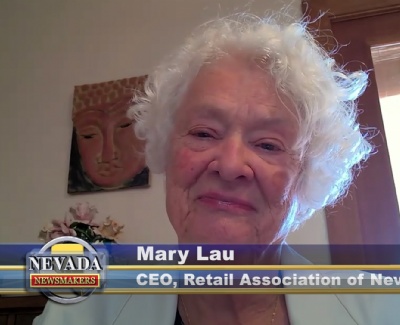 As voters migrate toward podcasts, streaming and direct sources, Nevada campaigns face a harder question than who has the biggest advertising budget.
Nevada Rebuilds Election System as Debate Over Trust Continues
News - September 1, 2026
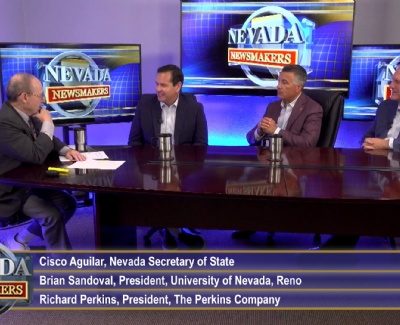 Secretary of State Cisco Aguilar says new equipment, a statewide voter system and faster ballot processing have moved Nevada near the top nationally - while mail voting and federal election authority remain under dispute.
Benitez-Thompson on the Record
News - August 19, 2026
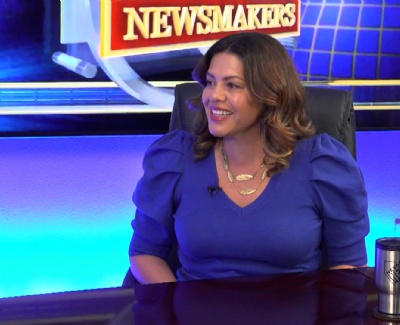 Democratic congressional candidate Teresa Benitez-Thompson used a recent appearance on Nevada Newsmakers to draw contrasts with her Republican opponent on affordability, tariffs and political independence, while also laying out her position on Israel, Gaza and U.S. involvement in Iran.











| Home Page | Archived Shows | Weekly Schedule | Daily Quotes | Ray Hagar | Contact Nevada Newsmakers |
Podcast Help | Terms of Service | Privacy Policy | Advertise with Us |
© 2005-2026 Sam Shad Productions, All Rights Reserved.